
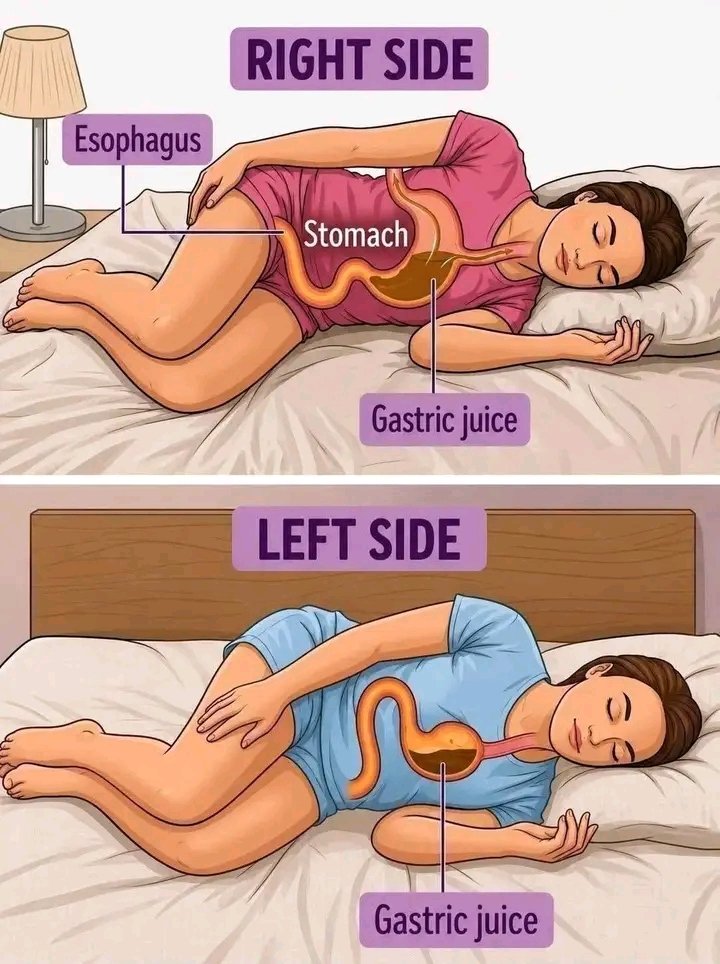
Doctors Explain What Happens When You Often Sleep on Your Right Side
Have you ever wondered whether sleeping on your right side could affect your health? Sleep position can influence comfort, digestion, breathing, and certain medical conditions. However, claims that sleeping on one particular side is dangerous for everyone are not supported by strong scientific evidence.
For most healthy adults, sleeping on the right side is a normal and generally safe position. The best position often depends on your individual health needs and what helps you sleep comfortably.
1. It May Affect Acid Reflux
One of the most important differences between sleeping on the right and left sides involves acid reflux.
For people who experience heartburn or gastroesophageal reflux disease (GERD), sleeping on the right side may worsen symptoms. Research suggests that sleeping on the left side can reduce nighttime acid exposure for some people.
Helpful tip: If you frequently experience heartburn at night, try sleeping on your left side and raising the head of your bed. Avoid lying down for about three hours after eating.
2. It Can Influence Snoring and Breathing
Side sleeping can help reduce snoring for some people compared with sleeping flat on their backs. This is because the position may help keep the airway more open.
However, sleeping on the right side is not guaranteed to prevent snoring or obstructive sleep apnea. If you regularly gasp during sleep, wake up choking, or feel excessively sleepy during the day, consult a healthcare professional.
3. It May Affect Comfort and Joint Pressure
Sleeping on either side can put pressure on the shoulder, hip, or arm beneath your body. If you wake up with discomfort, a supportive mattress and pillow may help.
Try placing a pillow between your knees to keep your hips more comfortable. If one shoulder hurts, changing sides or adjusting your sleeping position may reduce pressure.
4. What About the Heart?
You may have seen claims that sleeping on the right side harms the heart. For most healthy people, there is no convincing evidence that routinely sleeping on the right side causes heart disease.
People with certain heart conditions may find one position more comfortable than another. Some individuals notice that lying on their left side makes their heartbeat feel more noticeable, but this sensation alone does not necessarily indicate a heart problem.
If lying down causes shortness of breath, chest pain, or unusual discomfort, seek medical advice. Severe or sudden chest pain or difficulty breathing requires emergency care.
5. Can Right-Side Sleeping Affect Digestion?
Your sleeping position can influence how stomach contents move, particularly if you experience reflux. However, there is no good evidence that sleeping on the right side generally prevents digestion, damages the stomach, or causes toxins to accumulate.
Maintaining regular meal times, avoiding very large meals before bedtime, and getting adequate sleep are more useful habits for most people.
6. Is Sleeping on the Right Side Safe During Pregnancy?
During pregnancy, sleep-position advice depends partly on the stage of pregnancy. Later in pregnancy, healthcare professionals commonly recommend going to sleep on either side rather than flat on the back.
Both the left and right sides are generally acceptable. If you wake up on your back, do not panic; simply turn onto your side again. Follow your maternity care professional’s advice for your individual circumstances.
7. How Can You Choose the Best Sleeping Position?
Consider these practical guidelines:
- For acid reflux: Try sleeping on your left side and elevating your upper body.
- For shoulder or hip discomfort: Adjust your pillows or change sides.
- For snoring: Side sleeping may help, but persistent symptoms need assessment.
- For general sleep quality: Choose a comfortable position that allows you to rest without pain.
- For ongoing breathing problems: Seek medical evaluation rather than relying on sleep-position changes alone.
Final Thoughts
Sleeping on your right side is not inherently harmful, and there is no universal sleeping position that is best for everyone. The left side may be more helpful for people with nighttime acid reflux, while comfort and individual medical conditions can influence what works best for others.
Instead of worrying about alarming online headlines, pay attention to your symptoms, maintain healthy sleep habits, and speak with a healthcare professional if sleep regularly leaves you in pain or short of breath.
Replace the sensational headline with a balanced one