
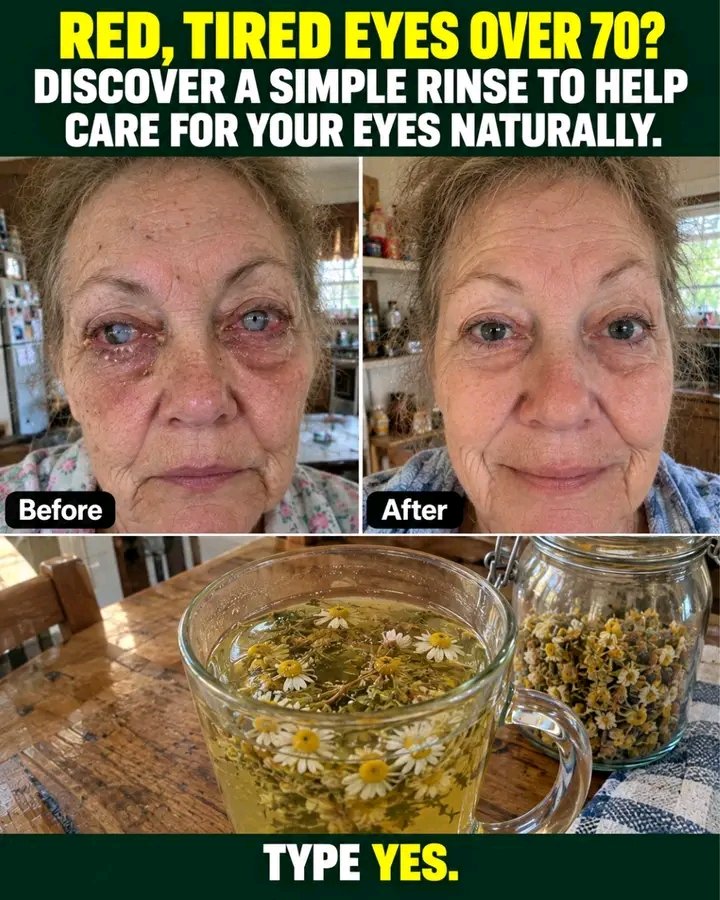
Red, Tired Eyes After 70? What Really Helps Keep Your Eyes Comfortable
As we get older, our eyes may become more sensitive, dry, irritated, or tired. Redness and blurred vision can sometimes result from everyday issues, such as dry eyes or eye strain. However, these symptoms should not automatically be dismissed as a normal part of aging.
You may have seen claims that a simple homemade rinse can restore clear, bright vision in just six hours. There is no reliable scientific evidence that a homemade eye rinse can safely restore vision that way. The right solution depends on what is causing the symptoms.
Why Do Eyes Become Red and Tired With Age?
Several conditions can contribute to eye discomfort in older adults.
1. Dry Eyes
Tears help lubricate and protect the surface of the eyes. Tear production and quality can change with age, leading to burning, redness, a gritty sensation, or fluctuating vision.
2. Eye Strain
Reading for long periods, using digital screens, or working in poor lighting can make the eyes feel tired. Taking regular breaks may help reduce discomfort.
3. Blepharitis
Inflammation around the eyelid edges can cause redness, irritation, crusting, and a sensation of dryness.
4. Other Eye Conditions
Cataracts, glaucoma, infections, and other eye diseases can affect vision. Redness combined with blurred vision may sometimes indicate a problem that requires prompt medical attention.
What Can You Safely Do for Red, Tired Eyes?
1. Consider preservative-free artificial tears. These lubricating eye drops may relieve symptoms of dry eyes. A pharmacist or eye-care professional can help you choose an appropriate product.
2. Apply a clean, warm compress. If your eyelids feel irritated or crusty, a comfortably warm—not hot—compress over closed eyelids may help. Avoid pressing on the eyeballs.
3. Give your eyes regular breaks. When reading or using a screen, look into the distance periodically and blink normally.
4. Protect your eyes from irritants. Smoke, dust, wind, and some cosmetics can worsen redness.
5. Arrange an eye examination. If redness or tiredness persists, returns frequently, or is accompanied by changes in vision, have your eyes examined.
Why You Should Avoid Homemade Eye Rinses
Never put homemade mixtures containing lemon juice, salt, herbs, tea, honey, or other kitchen ingredients into your eyes. They may irritate the eye or introduce harmful microorganisms.
Use only sterile products specifically intended for ophthalmic use. Even sterile saline does not treat every cause of red eyes or restore vision lost through an underlying condition.
When Should You Seek Urgent Care?
Seek urgent medical attention if you develop sudden blurred or lost vision, severe eye pain, marked light sensitivity, a very red eye with headache or nausea, or redness accompanied by a sudden change in sight.
These symptoms can indicate a serious eye condition, and waiting six hours for a home remedy could delay necessary treatment.
Final Thoughts
Healthy vision is especially important as we age. Although dry eyes and eye strain are common, persistent redness or tired eyes should not be treated with unproven remedies.
The safest approach is to identify the cause, use appropriate eye-care products, and obtain professional advice when needed. No homemade rinse has been proven to restore clear vision in six hours.
Add a brief medical disclaimerMake urgent warning signs more prominent