
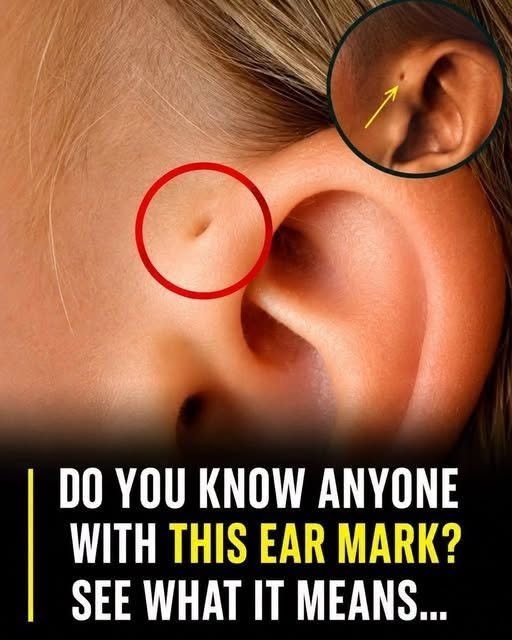
Do You Have This Tiny Hole Near Your Ear? Here’s What It Really Means
Have you ever noticed a tiny hole or opening just in front of your ear, near where the ear meets the face? You may have had it since birth without ever knowing what it is. Although it can look unusual, this small opening is often a harmless congenital feature known as a preauricular pit or preauricular sinus.
For most people, it causes no problems and requires no treatment. However, understanding what it is—and knowing which symptoms deserve attention—can help you take care of your ear health.
What Is the Tiny Hole Near the Ear?
A preauricular pit is a small opening in the skin located near the front of the ear, usually where the upper ear attaches to the face.
It develops before birth, while the structures of the outer ear are forming. In some people, a small channel forms beneath the skin and remains visible as a tiny opening after birth.
The opening may look like a pinhole or a small indentation. It is commonly found on one side, although some people have one on both sides.
The important point: A preauricular pit is usually a congenital anatomical variation, not a sign that something dangerous is happening inside your ear.
Why Do Some People Have This Tiny Opening?
The outer ear develops early during pregnancy through a complex process involving several small areas of tissue. A preauricular pit can form when these tissues do not fuse or develop in the usual way.
The exact developmental process is complex, but the opening is generally present from birth—even if someone does not notice it until later.
Some preauricular pits occur sporadically, while others run in families. Having one does not automatically mean that you have a hearing problem or another medical condition.
Is a Preauricular Pit Dangerous?
In most cases, no. A preauricular pit remains small and causes no discomfort throughout a person’s life.
However, the channel beneath the opening can sometimes collect skin debris or become infected.
Possible signs of infection include:
- Redness or swelling around the opening
- Tenderness or pain
- Fluid or pus draining from the area
- An unpleasant smell associated with discharge
- A small lump or abscess near the opening
If these symptoms occur, arrange a medical assessment. An infected pit may require treatment with antibiotics, drainage of an abscess, or other care depending on the severity.
Can the Tiny Hole Affect Your Hearing?
A preauricular pit by itself usually does not affect hearing.
In uncommon cases, a preauricular pit may occur alongside other congenital differences, including certain conditions that affect the ears, kidneys, or other structures. A clinician may recommend further evaluation when there are additional abnormalities, a relevant family history, or symptoms suggesting another condition.
If you have concerns about hearing, a hearing assessment can help identify the cause rather than assuming the opening is responsible.
Should You Clean or Squeeze the Hole?
It is best not to squeeze, probe, or insert cotton swabs, pins, or other objects into the opening. Doing so can irritate the tissue, introduce bacteria, or worsen inflammation.
For routine care:
- Gently wash the surrounding skin with water and a mild cleanser.
- Pat the area dry.
- Avoid squeezing the opening to remove material.
- Seek medical advice if you notice pain, swelling, redness, or discharge.
If the area repeatedly becomes infected, a healthcare professional may discuss whether surgical removal of the sinus tract is appropriate. Surgery is not routinely necessary for an asymptomatic pit.
Can It Disappear on Its Own?
A preauricular pit is a congenital opening and generally does not disappear naturally. However, if it is not causing symptoms, there is usually no need to remove it.
Surgical treatment may be considered for recurrent infections or persistent drainage. Because the channel can extend beneath the skin, treatment should be planned by an appropriately trained clinician.
When Should You See a Doctor?
Seek medical advice if the opening becomes painful, swollen, red, or starts producing fluid. Prompt assessment is particularly important if redness spreads, swelling increases rapidly, or you develop a fever.
A doctor can usually identify a preauricular pit by examining its location and appearance.
If a tiny opening near your ear is accompanied by hearing difficulties or other unusual symptoms, mention those concerns during your appointment.
Final Thoughts
That tiny hole near your ear may be a preauricular pit—a small feature that forms before birth and is usually harmless. Many people live with one for decades without any complications.
There is generally no reason to worry if it is painless and has never caused problems. The most important thing is to avoid squeezing it and to seek medical advice if signs of infection develop.
Take a moment to check: Have you noticed a tiny opening in front of one or both ears? If you have one, remember that its presence alone is usually not a cause for alarm.
SEO Details
SEO Title: Tiny Hole Near Your Ear: What Is a Preauricular Pit?
Focus Keyphrase: tiny hole near ear
Meta Description: Have a tiny hole near your ear? Learn what a preauricular pit is, why it develops, whether it is dangerous, and when to seek medical advice.
URL Slug: tiny-hole-near-ear-preauricular-pit
Category: Health and Wellness
Tags: preauricular pit, tiny hole near ear, ear anatomy, ear infection, congenital conditions, hearing health, health facts
Add a clear medical disclaimerStrengthen the urgent warning signs