
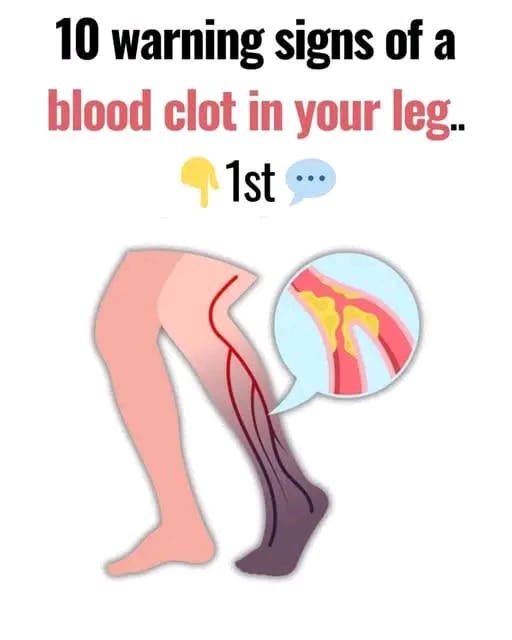
Here’s a professional, WordPress-ready health article that explains the warning signs of a blood clot in the leg, when to seek emergency care, and why early recognition matters.
10 Warning Signs of a Blood Clot in the Leg You Should Know
A blood clot in the leg can be more than a minor discomfort. One possible cause is deep vein thrombosis (DVT), a condition in which a clot forms in a deep vein, usually in the calf or thigh. If part of the clot breaks off and travels to the lungs, it can cause a life-threatening complication called a pulmonary embolism.
Recognizing possible symptoms early is important. However, a blood clot does not always cause noticeable signs, and symptoms such as leg pain or swelling can also have other causes.
What Is a Blood Clot in the Leg?
Deep vein thrombosis occurs when blood thickens and forms a clot in a deep vein. It is more likely to develop after prolonged immobility, surgery, hospitalization, or certain medical conditions. Other risk factors include pregnancy and the period after childbirth, estrogen-containing medications, cancer, previous blood clots, and increasing age.
A blood clot can occur without an obvious trigger, so it is important to know the possible warning signs.
10 Warning Signs of a Blood Clot in the Leg
1. Swelling in One Leg
One of the most recognizable signs of DVT is swelling in one leg, especially when the swelling develops unexpectedly. It may affect the calf, ankle, thigh, or the entire leg.
Swelling in both legs is more commonly associated with other conditions, but any sudden or unexplained swelling deserves medical attention.
2. Pain or Tenderness in the Calf
A clot may cause pain, soreness, or tenderness in the calf or thigh. The discomfort can feel like a persistent ache, cramp, or pulling sensation.
The pain may become more noticeable while standing or walking. However, calf pain alone cannot confirm a blood clot.
3. Warmth in the Affected Area
The skin over the affected leg may feel warmer than the surrounding skin or the same area on the other leg. This can occur because a clot may trigger inflammation in the surrounding tissues.
Warmth is not specific to DVT and can also occur with infections and other inflammatory conditions.
4. Red or Discolored Skin
The affected area may appear red, reddish-purple, or darker than usual. In some people, especially those with darker skin tones, the color change may be subtle or difficult to notice.
Do not rely on skin color alone to decide whether a clot is present.
5. A Feeling of Tightness or Heaviness
Some people describe the affected leg as unusually heavy, tight, or uncomfortable. This may occur alongside swelling or tenderness.
Although these sensations can result from muscle fatigue or other conditions, new and unexplained symptoms—particularly in one leg—should be assessed promptly.
6. Swelling That Develops Suddenly
Swelling that appears over hours or a short period, particularly when accompanied by pain, warmth, or discoloration, can be concerning.
Sudden one-sided swelling should not be dismissed as ordinary fluid retention. Seek urgent medical assessment if DVT is possible.
7. Pain That Worsens When Standing or Walking
Some people experience discomfort that becomes more noticeable when they stand, walk, or move the affected leg. Others may have pain even while resting.
Because muscle strains and injuries can produce similar symptoms, a medical professional may need to evaluate your symptoms and risk factors.
8. Enlarged or More Visible Surface Veins
Veins near the skin may appear more prominent when blood flow through deeper veins is obstructed. This is not a reliable sign on its own, and many people with DVT do not notice any changes in their surface veins.
New, unexplained vein changes accompanied by swelling or pain warrant medical evaluation.
9. Symptoms That Do Not Improve as Expected
Discomfort that persists, swelling that continues, or symptoms that seem to worsen without a clear explanation should not be ignored.
There is no single symptom pattern that reliably identifies DVT. Even mild symptoms may need urgent evaluation when risk factors are present.
10. Few or No Noticeable Symptoms
One important warning is that a blood clot can develop without obvious symptoms. Some people discover they have DVT only after being examined for another reason or after developing a complication.
If you have significant risk factors—such as recent major surgery, prolonged immobility, a previous DVT, or active cancer—contact a healthcare professional if you develop concerning symptoms, even if they seem mild.
When Is a Blood Clot an Emergency?
A blood clot can travel to the lungs and cause a pulmonary embolism. Call your local emergency number immediately if you experience any of the following:
- Sudden shortness of breath
- Chest pain, especially pain that worsens when breathing deeply
- Coughing up blood
- Fainting or feeling as though you may collapse
- A rapid heartbeat accompanied by breathing difficulties or chest discomfort
These symptoms require emergency evaluation. Do not wait to see whether they improve.
Who Is at Higher Risk of Developing a Blood Clot?
Certain factors increase the likelihood of DVT, including:
- Recent surgery or hospitalization
- Long periods of sitting or immobility, including during long-distance travel
- A previous blood clot or a family history of blood clots
- Active cancer or some cancer treatments
- Pregnancy or the weeks after childbirth
- Estrogen-containing birth control or hormone therapy
- Certain inherited clotting disorders
- Older age, obesity, or serious illness
Having a risk factor does not mean that a clot will develop, but it can make new symptoms more important to assess.
What Should You Do If You Suspect a Blood Clot?
If you develop unexplained swelling, pain, warmth, or discoloration in one leg, seek urgent medical evaluation—ideally the same day. A clinician may assess your symptoms and risk factors and arrange tests such as a D-dimer blood test or a compression ultrasound.
While waiting for medical advice:
- Do not massage the affected leg.
- Do not attempt to treat a suspected clot with home remedies.
- Do not start aspirin or blood-thinning medication unless a healthcare professional advises you to do so.
- If emergency symptoms such as chest pain or sudden breathlessness develop, call emergency services immediately.
DVT cannot be confirmed or ruled out based on symptoms alone. Appropriate medical testing is important.
How Can You Help Reduce Your Risk?
You can take practical steps to lower your risk of developing a blood clot:
- Move regularly and avoid remaining seated for long periods.
- During long journeys, take breaks to walk when possible and move your ankles and calves while seated.
- Follow your medical team’s instructions after surgery or hospitalization.
- Use prescribed compression devices or medication when recommended by your healthcare professional.
- Discuss your personal risk before starting estrogen-containing medication or hormone therapy, particularly if you have a history of blood clots.
People with significant risk factors may need a personalized prevention plan.
Final Thoughts
A blood clot in the leg can cause one-sided swelling, calf or thigh pain, warmth, tenderness, or skin discoloration—but it can also develop with few or no symptoms. These signs do not prove that a clot is present, and their absence does not rule one out.
Do not ignore sudden, unexplained swelling or pain in one leg. Seek urgent medical assessment if you suspect DVT, and call emergency services immediately if you develop sudden shortness of breath, chest pain, coughing up blood, or fainting.
Medical disclaimer: This article is for educational purposes only and is not a substitute for professional medical advice, diagnosis, or treatment.
WordPress SEO details
- SEO title: 10 Warning Signs of a Blood Clot in the Leg You Should Know
- Focus keyphrase: warning signs of a blood clot in the leg
- Meta description: Learn 10 possible warning signs of a blood clot in the leg, common DVT risk factors, and emergency symptoms that require immediate medical attention.
- URL slug:
warning-signs-blood-clot-leg - Suggested category: Health & Wellness
- Suggested tags: Blood Clots, Deep Vein Thrombosis, DVT Symptoms, Leg Swelling, Blood Clot Prevention