
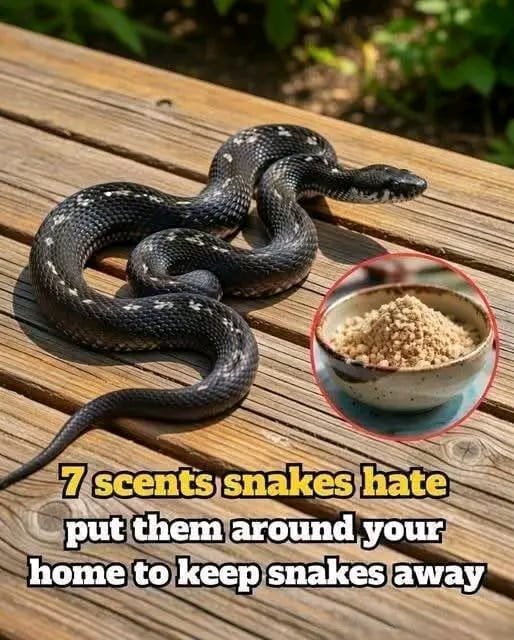
7 Smells People Claim Snakes Hate — and How to Keep Snakes Away From Your Home
Snakes can detect chemical cues in their environment using a specialized sensory system. That ability helps them find prey, recognize other animals, and navigate their surroundings. So, can certain smells keep snakes away from your home?
You may have heard that snakes hate the smell of garlic, cinnamon, vinegar, or strong essential oils. These remedies are popular in gardening and home-maintenance tips, but there is little reliable scientific evidence that household scents consistently repel snakes or keep them away for long.
Rather than relying on a scent alone, the most effective approach is to make your property less attractive to snakes, block potential entry points, and reduce places where they can hide or find food.
Here are seven commonly discussed scents, what is known about them, and safer ways to protect your home.
1. Garlic
Garlic has a strong odor because it contains sulfur-containing compounds. This has made garlic a popular ingredient in homemade snake-repellent recipes.
Some people scatter crushed garlic around garden edges or prepare garlic-water sprays. However, there is not enough reliable evidence to conclude that these methods provide dependable protection against snakes.
A better approach: If you enjoy gardening with garlic, use it as you normally would, but do not treat it as a protective barrier. Keep grass trimmed, remove piles of debris, and inspect gaps around sheds and foundations.
2. Cinnamon
Cinnamon has a distinctive aroma and is often promoted online as a natural way to deter snakes.
Although cinnamon-based products have been studied for certain pest-control applications, that does not establish that ordinary cinnamon powder or cinnamon essential oil will reliably repel snakes in a home garden.
A better approach: Avoid spreading powders or concentrated oils around areas where children or pets may come into contact with them. Focus on physical barriers and reducing hiding places instead.
3. Clove
Cloves contain aromatic compounds, including eugenol, which gives them their strong smell. Clove oil is sometimes included in homemade pest-repellent mixtures.
However, a strong odor does not automatically mean a substance will repel snakes. There is insufficient evidence that placing cloves or clove oil around a property offers reliable snake protection.
A better approach: Do not pour concentrated clove oil around doorways, gardens, or animal enclosures. Essential oils can irritate skin and may be toxic to pets if swallowed or used improperly.
4. Vinegar
Vinegar has a sharp, acidic smell, leading some homeowners to pour it around patios, garden borders, or swimming pools to discourage snakes.
However, vinegar has not been established as a reliable snake repellent. Its smell may dissipate quickly outdoors, and snakes may still cross treated areas.
A better approach: Keep outdoor areas tidy, repair damaged screens, and seal gaps around pipes, doors, and foundations. Never pour vinegar into natural habitats or water sources as a wildlife-control method.
5. Peppermint
Peppermint oil is often promoted as a natural pest deterrent because of its strong aroma. Some online recipes suggest spraying it around windows, doors, and garden edges.
Unfortunately, there is no strong evidence that ordinary peppermint oil sprays reliably keep snakes away from residential properties.
A better approach: If you use peppermint products for other purposes, follow the label and keep concentrated oils away from children and pets. Do not depend on them to protect an entrance or outdoor play area.
6. Ammonia
Ammonia has a powerful, irritating odor, and some home remedies recommend placing ammonia-soaked cloths near suspected snake entry points.
This is not a dependable or advisable general solution. Ammonia fumes can irritate the eyes and respiratory system, and concentrated products can cause serious injuries.
A better approach: Avoid placing ammonia-soaked cloths around your home, especially in enclosed spaces. Never mix ammonia with bleach or other cleaning products, as dangerous gases may form.
Seal openings and remove hiding places instead.
7. Sulfur and Mothball Odors
Sulfur-based powders and mothballs containing naphthalene are sometimes promoted as snake deterrents.
Research has not shown that these substances consistently prevent snakes from entering yards or homes. Mothballs are particularly concerning because they can poison children and pets if swallowed or cause harm through improper exposure.
A better approach: Never scatter mothballs around your garden or use them in ways that contradict their product labels. Use physical exclusion and habitat management instead.
Research reviewed by wildlife experts suggests that the effectiveness of many commercial snake repellents is inconsistent, and results from limited studies on particular species cannot be assumed to apply to all snakes. <Link url=”https://www.aphis.usda.gov/sites/default/files/tn_snakerepellents.pdf” title=”USDA Wildlife Services: Snake Repellents”/>; <Link url=”https://vtfishandwildlife.com/learn-more/living-with-wildlife/snake-faqs” title=”Vermont Fish & Wildlife: Snake FAQs”/>.
What Actually Works to Help Keep Snakes Away?
Scents may sound like an easy solution, but preventing access to food and shelter is a more dependable strategy.
<box gap={3}> <row align=start gap={3}> <AsyncImage query=”neatly mowed grass trimmed shrubs along house foundation garden” aspectRatio=”4:3″ width=”112px” /> <box flex=”1″ gap={1}> **1. Keep grass and vegetation trimmed**
  Tall grass, dense ground cover, and overgrown shrubs provide hiding places. Maintain a clear area around the house and frequently used paths.
</box>
</row> <divider color=”subtle” /> <row align=start gap={3}> <AsyncImage query=”neatly stacked firewood on raised rack away from house wall” aspectRatio=”4:3″ width=”112px” /> <box flex=”1″ gap={1}> **2. Remove clutter and raise firewood**
  Clear piles of rocks, boards, scrap metal, and rubbish. Store firewood on a raised rack away from the building.
</box>
</row> <divider color=”subtle” /> <row align=start gap={3}> <AsyncImage query=”close up sealing exterior house foundation gap around pipe with weatherproof sealant” aspectRatio=”4:3″ width=”112px” /> <box flex=”1″ gap={1}> **3. Seal potential entry points**
  Inspect gaps around doors, pipes, vents, and foundations. Use suitable materials to close openings and fit tight door sweeps and screens.
</box>
</row> <divider color=”subtle” /> <row align=start gap={3}> <AsyncImage query=”rodent proof sealed outdoor animal feed storage container lid” aspectRatio=”4:3″ width=”112px” /> <box flex=”1″ gap={1}> **4. Reduce rodents and other food sources**
  Store animal feed securely, remove spilled birdseed, and avoid leaving pet food outside overnight. Fewer rodents can make the property less attractive to some snakes.
</box>
</row> <divider color=”subtle” /> <row align=start gap={3}> <AsyncImage query=”fine mesh snake exclusion fence garden boundary close up” aspectRatio=”4:3″ width=”112px” /> <box flex=”1″ gap={1}> **5. Consider appropriate exclusion fencing**
  Where snakes are frequently encountered, properly installed snake-exclusion fencing may help protect a specific area. Design and installation should account for local snake species and terrain.
</box>
</row> </box>
These practical steps are consistent with recommendations from <Link url=”https://extension.missouri.edu/publications/agw1011” title=”University of Missouri Extension”/> and the <Link url=”https://animalrangeextension.montana.edu/wildlife/prevention_and_control/snakes.html” title=”Montana State University Extension”/>.
What Should You Do If You Find a Snake?
If you spot a snake near your home, stay calm and keep your distance.
- Do not try to pick it up, corner it, or kill it.
- Bring children and pets indoors or move them well away.
- Do not attempt to identify a potentially venomous snake at close range.
- Contact a qualified local wildlife professional or the appropriate local authorities for assistance if the snake is inside your home or presents a danger.
If someone is bitten, seek emergency medical care immediately. Keep the person as still as possible, and do not cut the wound, suck out venom, apply a tourniquet, or attempt to catch the snake.
Final Thoughts
Garlic, cinnamon, cloves, vinegar, peppermint, ammonia, and sulfur are frequently mentioned in discussions about snake-repelling smells. But a strong odor is not the same as a proven, long-lasting deterrent.
The most practical way to reduce unwanted snake encounters is to remove hiding places, control rodents, and seal openings around your home. These steps address the conditions that can attract snakes instead of relying on an unproven scent barrier.
Frequently Asked Questions
Do snakes hate the smell of garlic?
Garlic is commonly recommended as a home remedy, but reliable evidence that it consistently repels snakes outdoors is lacking.
Will cinnamon oil keep snakes away?
Certain concentrated oils have caused avoidance or irritation in studies involving particular snake species. That does not prove that cinnamon oil applied around a yard will prevent snakes from entering.
Are mothballs effective against snakes?
They are not a dependable snake-control method and can pose serious poisoning risks to children and pets.
What is the best natural way to discourage snakes?
Keep the yard maintained, reduce rodents, remove debris, and close potential entry points. These measures are generally more dependable than homemade scent remedies.
Sources
Disclaimer: This article provides general educational information. Local snake species and safety recommendations vary by region. If snakes are common in your area, consult local wildlife authorities for advice suited to your location.
Add a stronger opening answerClarify what “seven smells” means