
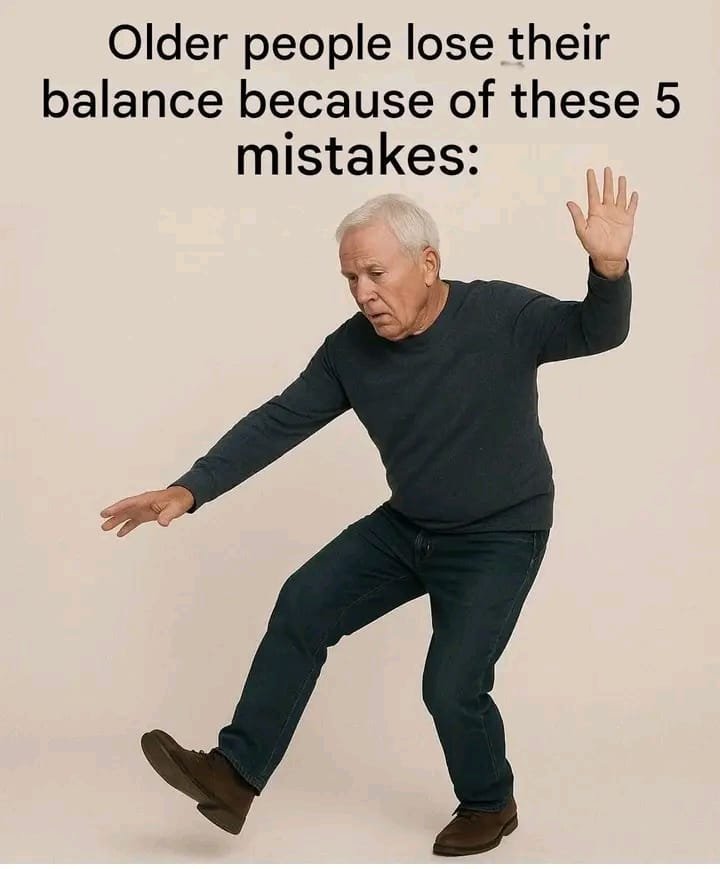
5 Common Mistakes That Cause Older People to Lose Their Balance
Losing your balance as you get older is not something you should simply accept as a normal part of aging. Although changes in muscle strength, vision, and coordination can affect stability, many balance problems are influenced by everyday habits that can be improved.
For older adults, even a small loss of balance can increase the risk of falls, injuries, and loss of independence. The good news is that recognizing common mistakes and making a few practical changes may help improve stability and confidence when walking.
Here are five common mistakes that can contribute to balance problems in older adults—and what you can do about them.
1. Avoiding Physical Activity
One of the most common mistakes is becoming less active out of fear of falling.
Although it may seem safer to spend more time sitting, inactivity can gradually weaken the muscles that help support the body. Leg strength, flexibility, coordination, and reaction time all contribute to balance.
When these abilities decline, everyday activities such as standing up from a chair, climbing stairs, or walking on uneven ground may become more difficult.
What can help?
Regular, appropriate physical activity can help maintain strength and stability. Depending on individual ability, useful options may include:
- Walking on a safe, even surface
- Gentle strength exercises for the legs
- Practicing standing from a sturdy chair
- Tai chi or other balance-focused exercise programs
- Supervised physical therapy when balance is already impaired
Older adults who have frequent falls, significant weakness, dizziness, or difficulty walking should consult a healthcare professional before starting a new exercise routine. A physical therapist can recommend exercises suited to their abilities.
2. Wearing the Wrong Shoes
Footwear can make a significant difference in stability. Loose slippers, shoes that slide off easily, worn-out soles, and high heels may increase the likelihood of slipping or stumbling.
Shoes that do not fit properly can also cause discomfort, change the way someone walks, or make it harder to feel secure on different surfaces.
Walking in socks on smooth floors can be risky as well, especially when the socks lack nonslip grips.
What can help?
Choose shoes that offer:
- A secure fit around the heel
- Good grip on the sole
- A comfortable, supportive design
- A low, stable heel
- Enough room for the toes without allowing the foot to slide around
Replace footwear when the soles become worn or slippery. If foot pain, numbness, or deformities affect walking, seek advice from a healthcare professional or foot specialist.
3. Ignoring Dizziness or Changes in Vision
Balance depends on several systems working together, including the eyes, inner ear, muscles, nerves, and brain. Problems affecting any of these systems can make it harder to remain steady.
For example, untreated vision problems can make it difficult to judge steps and obstacles. Inner-ear conditions may cause vertigo, while some medications or drops in blood pressure can cause lightheadedness when standing.
A common mistake is assuming that dizziness, blurred vision, or unsteadiness is simply part of getting older.
What can help?
Older adults should arrange a medical assessment for new, recurring, or unexplained dizziness or balance problems. Helpful steps may include:
- Keeping prescription glasses up to date
- Having regular eye examinations
- Reviewing medications with a doctor or pharmacist
- Standing up slowly from a seated or lying position
- Reporting symptoms that occur when standing
Seek emergency medical help if sudden dizziness or loss of balance occurs with facial drooping, weakness or numbness on one side, difficulty speaking, double vision, or a severe sudden headache. These can be signs of a stroke.
4. Leaving Trip Hazards Around the Home
Many falls happen during ordinary activities at home. Loose rugs, electrical cords, cluttered walkways, slippery bathroom floors, and poorly lit stairways can turn familiar surroundings into hazards.
Older adults may be particularly vulnerable if they also have reduced vision, slower reaction times, or difficulty lifting their feet while walking.
What can help?
A safer home environment can reduce avoidable risks.
Consider these changes:
- Remove loose rugs or secure them with appropriate nonslip backing.
- Keep hallways and walkways free of clutter and cables.
- Improve lighting, especially near stairs and entrances.
- Install sturdy handrails on stairways.
- Add grab bars near the toilet and in the shower when appropriate.
- Use nonslip bath mats and promptly clean up spills.
- Keep frequently used items within easy reach.
Avoid using towel rails or unstable furniture as supports. Grab bars and handrails should be securely installed and designed to bear weight.
A home safety assessment from an occupational therapist or another qualified professional can be especially helpful for someone with a history of falls.
5. Getting Up Too Quickly or Ignoring Medication Side Effects
Standing up suddenly after sitting or lying down can sometimes cause a temporary drop in blood pressure, known as orthostatic hypotension. This may lead to lightheadedness, blurred vision, weakness, or a feeling that the room is moving.
Some medications can also contribute to dizziness, drowsiness, or impaired coordination. These may include certain blood pressure medicines, sleep medications, sedatives, and other drugs, depending on the person and dosage.
Older adults sometimes overlook these symptoms or try to manage them without discussing them with a healthcare professional.
What can help?
Try the following precautions:
- Move from lying to sitting slowly.
- Sit briefly before standing.
- Hold a stable support if needed.
- Pause before walking to make sure you feel steady.
- Tell your healthcare professional if you regularly feel dizzy or faint when standing.
Stay adequately hydrated unless your clinician has advised you to restrict fluids because of a medical condition.
Never stop or change prescribed medication on your own. A doctor or pharmacist can review your medicines, check for possible interactions, and determine whether adjustments are appropriate.
Other Factors That Can Affect Balance
In addition to these five common mistakes, several medical and physical factors can contribute to instability, including:
- Reduced sensation in the feet
- Muscle weakness or joint pain
- Parkinson’s disease and other neurological conditions
- Inner-ear disorders
- Previous falls or injuries
- Poor nutrition or inadequate fluid intake
- Cognitive changes that affect attention and awareness
Balance problems can have more than one cause. Identifying the underlying factors is often the most effective way to reduce risk.
When Should an Older Adult Seek Medical Advice?
A healthcare professional should evaluate balance problems that are new, persistent, worsening, or interfering with daily activities.
An assessment may include checking walking ability, leg strength, blood pressure, vision, medication use, and possible neurological or inner-ear problems. Depending on the findings, a clinician may recommend physical therapy, a mobility aid, medication changes, or further testing.
After a fall, seek medical attention if there is significant pain, difficulty bearing weight, or a suspected injury. A head injury needs urgent assessment, particularly if the person takes blood-thinning medication. Call emergency services for loss of consciousness, severe symptoms, or suspected serious injury.
Simple Daily Habits That May Improve Stability
Small, consistent changes can support safer movement:
- Stay physically active at a level appropriate for your health.
- Practice recommended balance and strength exercises.
- Wear secure, supportive footwear.
- Keep floors and pathways clear.
- Have vision and hearing concerns assessed.
- Take medicines exactly as prescribed and report side effects.
- Use a cane or walker if recommended and make sure it is fitted correctly.
- Ask for help with activities that feel unsafe.
If you are worried about falling, do not feel that you must manage the problem alone. A healthcare professional can help create a plan that supports both safety and independence.
Final Thoughts
Balance problems in older adults can result from a combination of physical changes, health conditions, medications, and everyday environmental hazards. Avoiding activity, wearing unstable footwear, ignoring dizziness, leaving trip hazards around the home, and standing up too quickly can all contribute to fall risk.
The most important step is not to dismiss repeated unsteadiness as an inevitable part of aging. With appropriate medical assessment, safer surroundings, suitable exercise, and attention to medication effects, many older adults can improve their stability and reduce their risk of falling.
Medical disclaimer: This article is intended for general educational purposes and does not replace professional medical advice, diagnosis, or treatment.
WordPress SEO details
- SEO title: 5 Common Mistakes That Cause Older Adults to Lose Their Balance
- Focus keyphrase: balance problems in older adults
- Meta description: Discover five common mistakes that can affect balance in older adults, plus practical tips to reduce fall risks and support safer, more confident movement.
- URL slug:
common-mistakes-older-adults-lose-balance - Category: Health & Wellness
- Tags: Healthy Aging, Balance Problems, Fall Prevention, Senior Health, Mobility, Elderly Care